

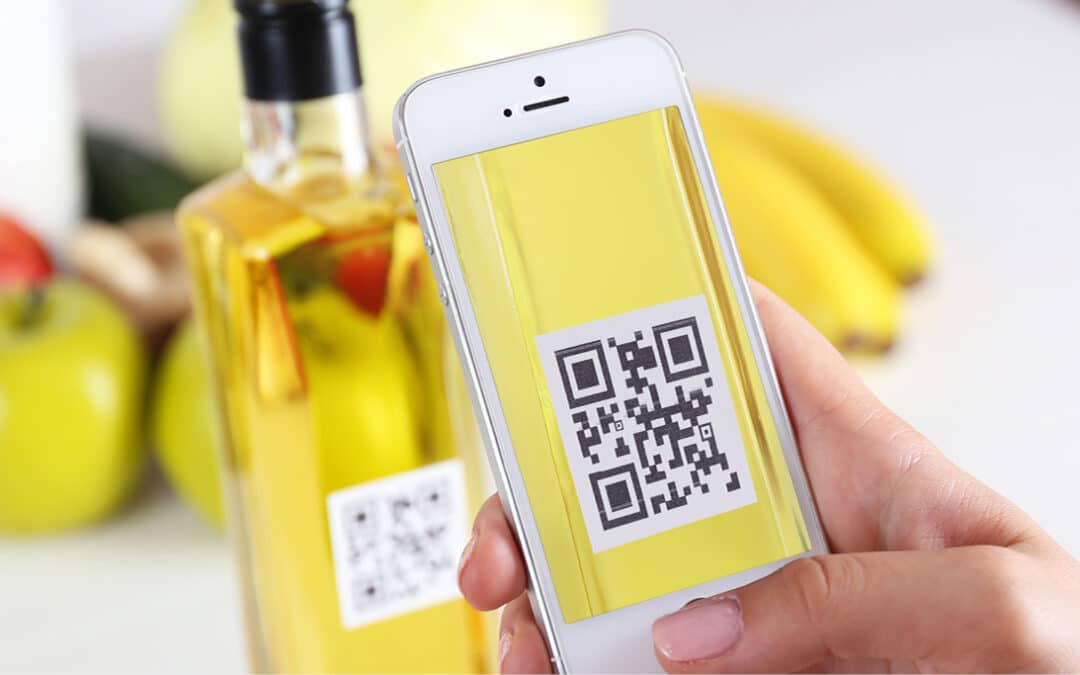
What Are Smart Packaging QR Codes?
Walk down any supermarket aisle today and you will notice something that was barely visible five years ago a small square code on almost every product. These are not ordinary barcodes. They are QR codes embedded into smart packaging, and they are quietly transforming how manufacturers operate, how supply chains function, and how consumers interact with the products they buy.
Smart packaging QR codes go beyond simply linking to a website. They serve as a live data bridge between a physical product and a digital ecosystem encoding traceability data, compliance records, marketing content, and real-time logistics information in a format any smartphone can read instantly.
Adoption is accelerating fast. QR code integration in packaging grew by 44% in 2025, and close to 79% of consumers are now more likely to purchase a product that carries a QR code. The message for manufacturers is clear: smart packaging is no longer a premium add-on. It is becoming a baseline expectation.
How Dynamic QR Codes for Product Packaging Work
Not all QR codes are created equal. There are two core types manufacturers should understand.
Static QR codes encode fixed information directly into the code itself. Once printed, the destination or data cannot be changed without reprinting the label entirely.
Dynamic QR codes store a short redirect URL in the code, with the actual content hosted on a cloud server. This means the linked information a product page, a compliance certificate, a promotional offer can be updated at any time without touching the physical packaging. In 2026, dynamic QR codes have become the default choice for manufacturing and marketing teams that need flexibility, analytics, and ongoing optimisation.
Generating and applying QR codes in manufacturing
The process begins with a QR code generator a software tool into which manufacturers input the desired content or destination URL. The tool encodes this into the familiar square matrix pattern. That code can then be applied to packaging in several ways:
- Printed directly onto primary or secondary packaging during production
- Applied as a label after production, using standard label applicators
- Integrated into the packaging artwork and design from the outset
Each method suits different production volumes and packaging formats. High-volume FMCG manufacturers typically integrate codes into the print file, while smaller-batch producers often opt for post-production labels for maximum flexibility.
QR Code Supply Chain Traceability: Why It Matters More Than Ever
Traceability has become one of the most pressing challenges in modern manufacturing. Regulatory requirements are tightening globally from the EU's Digital Product Passport initiative to the FDA's traceability rule in the US food sector and QR codes are emerging as the practical solution.
End-to-end visibility
QR codes enable real-time tracking of goods as they move through every stage of the supply chain from raw material sourcing and production to warehousing, distribution, and retail. Each scan generates a timestamped data point, giving manufacturers a live view of where their products are and whether they are within specification.
For global supply chains where components and finished goods cross multiple borders, this level of visibility is invaluable. Dynamic QR codes are particularly powerful here, as they can store multilingual documentation and be updated to reflect the latest regulatory or compliance requirements without reprinting.
Anti-counterfeiting and product authentication
Counterfeit products cost manufacturers billions annually and carry serious brand and safety implications, particularly in pharmaceuticals, electronics, and food. QR code labels in manufacturing offer a robust layer of authentication that is extremely difficult for counterfeiters to replicate.
Each product can carry a unique, encrypted QR code linked to verified production data manufacturing date, batch number, factory origin, and inspection records. End users and distributors alike can scan the code to confirm authenticity instantly, without specialist equipment.
Faster, more targeted recalls
When a quality issue arises, speed and precision are everything. QR-code-enabled traceability allows manufacturers to identify exactly which batch numbers, production runs, or shipment consignments are affected rather than issuing a blanket recall across an entire product line. This protects consumers while significantly reducing the cost and reputational damage of recall events.
Consumer Engagement: Turning Packaging Into a Digital Touchpoint
Beyond operational benefits, smart packaging QR codes are redefining the consumer experience. Modern shoppers want more than a product they want transparency, storytelling, and interaction.
QR codes on packaging can deliver all of this on demand:
- Product origin and ingredient transparency - particularly valued in food, beverage, and cosmetics
- How-to tutorials and demo videos - reducing returns and improving satisfaction
- Augmented reality experiences - immersive brand storytelling directly from the shelf
- Loyalty rewards and personalised offers - driving repeat purchase and LTV
- Sustainability credentials - carbon footprint data, recyclability guides, and ethical sourcing information
Personalisation is proving especially effective. When QR experiences are tailored by product variant or region, dwell time increases dramatically in one documented case, personalised QR content delivered 5.6 times longer engagement than a standard landing page.
Key Business Benefits of QR Code Labels in Manufacturing
Sustainability and cost efficiency
One frequently overlooked advantage of smart packaging QR codes is the environmental and cost case. A single QR code can replace a multi-page printed product manual, safety leaflet, or regulatory insert — reducing paper waste, printing costs, and packaging weight simultaneously. For manufacturers operating at scale, this adds up to meaningful savings and a measurable reduction in environmental footprint.
Key benefits at a glance:
- Supply chain visibility - real-time tracking across all logistics stages
- Anti-counterfeiting - unique, encrypted codes prevent duplication
- Recall management - pinpoint batch-level identification
- Consumer engagement - interactive content without new packaging print runs
- Sustainability - replaces printed inserts and manuals
- Cost reduction - reduces paperwork, manual data entry, and errors
Challenges to Consider Before Implementation
Deploying QR code labels in manufacturing is not without its challenges. Being aware of them upfront leads to a smoother rollout.
Consumer awareness and scanning behaviour
Despite rapid growth, not all consumers automatically think to scan a QR code. Clear on-pack messaging such as "Scan to learn more" and a compelling reason to scan a discount, a recipe, exclusive content are essential to driving adoption.
Technical accuracy during production
QR codes are precision-printed assets. Even minor distortions, ink bleeds, or substrate issues can render a code unscannable. Quality control protocols for QR code verification should be built into the production line.
Infrastructure and initial investment
Integrating QR code generation and tracking with existing ERP or WMS platforms requires upfront investment and internal resource. However, the operational savings and data advantages typically deliver a strong return within the first year for mid-to-large manufacturers.
Frequently Asked Questions
What is the difference between a static and dynamic QR code on packaging?
A static QR code has fixed content that cannot be changed after printing. A dynamic QR code links to a cloud-hosted destination that can be updated at any time making it far more practical for manufacturing, where compliance information, promotions, or product pages may need to change.
Are QR codes on product packaging replacing barcodes?
Not entirely, but QR codes carry significantly more data than traditional linear barcodes. Many manufacturers now use both the barcode for point-of-sale scanning and the QR code for consumer engagement and supply chain traceability.
How do QR codes help with regulatory compliance in manufacturing?
Dynamic QR codes can link to up-to-date compliance certificates, safety data sheets, and regulatory documentation. This is particularly valuable in pharmaceutical, food, and chemical manufacturing where compliance requirements evolve frequently.
What industries benefit most from QR code labels in manufacturing?
Food and beverage, pharmaceuticals, electronics, logistics, and consumer goods are the leading adopters though QR code traceability is increasingly relevant across virtually every manufacturing sector.
The Bottom Line
Smart packaging QR codes have moved well beyond novelty. In 2025 and into 2026, they represent a practical, scalable solution to three of manufacturing's most persistent challenges: supply chain visibility, consumer engagement, and regulatory compliance.
Dynamic QR codes in particular are enabling manufacturers to treat their physical packaging as a living, updatable digital asset connecting every product to a richer, more transparent experience for everyone in the supply chain, from factory floor to end consumer.
For manufacturers yet to integrate QR code labels into their packaging strategy, the question is no longer whether to act it is how quickly they can get started.
Recent Comments