

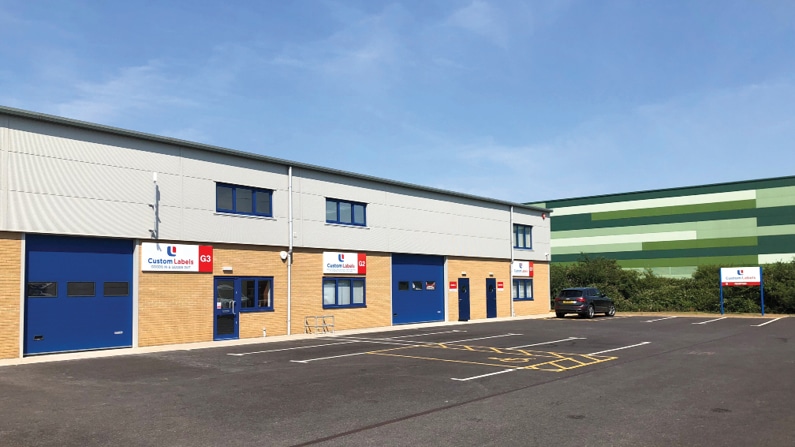
Nearly three decades is a long time to spend thinking about labels. We started out in Somerset making high-quality labels and asset tags, and somewhere along the way we became the people that organisations call when their labelling has gone wrong, or when they want to make sure it doesn't.
We've worked with everyone from single-site small businesses managing a handful of laptops to large multi-site organisations tracking thousands of assets across complex estates. The industries change (manufacturing, healthcare, education, facilities management, logistics) but the questions are remarkably consistent. And so are the mistakes.
This is a collection of what we've picked up over the years: the things that matter, the things that are frequently overlooked, and the advice we find ourselves giving again and again.
The gap between records and reality is where the real problem starts
Organisations are generally quite good at keeping records. What they're less good at is keeping those records connected to the physical things they describe.
Items get moved. Equipment goes on loan and never comes back. Staff leave and take institutional knowledge with them. A register that was accurate three years ago quietly fills up with what we call ghost assets: items that exist on paper but have long since disappeared in practice. Industry estimates put this at somewhere between 10% and 30% of assets in unmanaged estates. That has real consequences when you consider the insurance premiums being paid on items that aren't there, or the capital allowance claims resting on records that no longer reflect reality.
A label is what prevents this drift. It's a physical link between an item and its record. Without it, the two slowly pull apart.
A label is not the record, it's what keeps the record honest
This sounds obvious, but it's worth saying clearly because we still meet customers who conflate the two.
The record lives in your register or asset management system. The label's job is to make the item quickly and reliably identifiable for its entire useful life. Every audit, every maintenance check, every insurance claim and disposal decision depends on that label being in place and readable.
When a label fails, because it was under-specified, badly applied, or never suited to the surface it was applied to, the link breaks. The item and its record drift apart, and you're back where you started.
Specifying a label is not the same as ordering a sticker
This is probably where we spend the most time with new customers, and it's where the most costly mistakes get made.
The most important question to ask upfront is: what conditions will this label face, and for how long? A laptop in a climate-controlled office is a very different challenge from a pressure vessel in a plant room or a piece of survey equipment that lives in the back of a van. The label needs to outlast the asset. A label that fails halfway through a five-year asset life means the entire estate needs relabelling, old IDs reconciled with new ones, and audit trails updated. The labour cost of that exercise almost always exceeds the original label cost many times over.
Labels fail for four reasons: the adhesive gives up (wrong chemistry for the surface, or applied in the wrong conditions); the print degrades (UV fade, chemical attack from cleaning products, abrasion); the substrate itself deteriorates (cheaper plastics crack or embrittle over time); or the print layer delaminates from the substrate.
That fourth one catches people out because the label can look perfectly intact right up until the moment the print separates. A thick, laminated label with good adhesion can still fail if the lamination lifts at the edges, which it often does on curved or flexing surfaces. The print is exposed, moisture gets underneath, and within months you have a label that's physically still attached but completely unreadable.
The way around this is under-surface printing. The ink is applied to the underside of a clear substrate, with the adhesive behind it. The substrate itself becomes the protective layer. Because the print is never exposed to the outside world, it can't be abraded, chemically stripped, or worn away. It's why we built our Ultimate Asset Tag and UltraTuff ranges around this approach.
The surface matters as much as the label
We've lost count of the number of times a customer has described a label failure and, when we ask about surface preparation, there's a long pause. Application conditions account for a significant proportion of label failures, and they're entirely preventable.
The adhesive needs a clean, dry surface at the right temperature. Oil, dust, moisture, or residue will undermine even the best adhesive. Low-energy plastics (polyethylene and polypropylene in particular) are notoriously difficult to bond to and need a high-tack formulation rather than a standard acrylic. Applying in cold conditions, below around 10°C, causes many standard adhesives to fail to form a proper bond. And the label needs time, ideally 48 to 72 hours, to reach full bond strength before the asset goes back into use.
Getting this right is the difference between a label that lasts ten years and one that starts lifting at the corners within six months.
What goes on the label matters more than people think
Human-readable information (a unique ID, your organisation name, a contact number) and machine-readable information (a barcode or QR code) aren't alternatives to each other. The best labels carry both. The human-readable content is your fallback when a scanner isn't available, a code is partially damaged, or someone just needs a quick visual check. Relying solely on a scannable code is a single point of failure that's easy to avoid.
QR codes have become more or less the default for portable assets and general-purpose estates, mainly because any smartphone can read them without dedicated hardware. They also have built-in error correction, so a QR code can remain readable with around 30% of its surface obscured or damaged, which is useful in real-world conditions.
One thing we raise regularly, and which almost never gets discussed when people order QR-based labels, is what the code actually points to. If your QR code links to an online record, where exactly does it point, who controls that domain, and what happens if the system behind it is retired? We've seen estates where every label in the building became a dead link because the platform they pointed to was decommissioned. Agreeing on persistent, controllable redirects at the time of ordering takes minutes and prevents a problem that's very hard to fix after the fact.
Tamper-evident and destructible aren't the same thing
We see these terms used interchangeably all the time, but they describe different outcomes.
A tamper-evident label survives removal but leaves a visible mark (typically a VOID pattern) on the surface underneath. The evidence that something was interfered with is preserved, but the removed label itself may still be intact.
A destructible label physically disintegrates when peeled. It can't be removed in one piece and therefore can't be transferred to another item. If the goal is to prevent re-labelling entirely, destructible is the right choice. If you just need a record that an attempt was made, tamper-evident is sufficient.
They serve different purposes. Confusing them means specifying the wrong level of security for the job.
The register is only as good as the process around it
Labels are the foundation, but the register is the structure. The most common reason registers deteriorate isn't bad software or poor labelling, it's that nobody has clear ownership of the register as a whole.
Finance owns the financial register. IT owns the laptops. Operations owns the plant. Items fall through the gaps between departments, and over time the register becomes a historical document rather than an accurate picture of what you actually have.
Naming a single person with responsibility for register accuracy, and building the habit of registering assets at the moment of acquisition rather than retrospectively, is more valuable than any choice of software. The easiest time to register an asset is when it arrives. Doing it six months later, when the purchase documents have been filed and the item has moved twice, takes far longer and is far less reliable.
Nearly thirty years of the same questions
We're not a large business. We manufacture everything in-house here in Somerset, hold ISO 9001 and ISO 14001 accreditation, and every enquiry is handled by someone who knows the product. When you call us or send an email, you get a straightforward conversation.
If you're specifying labels for the first time, or reviewing what you have and wondering whether it's fit for purpose, we're happy to talk it through. We can send samples before you commit to an order. And if your situation is more complex (awkward surfaces, extreme environments, specific compliance requirements) we've almost certainly come across something similar before.
Recent Comments