

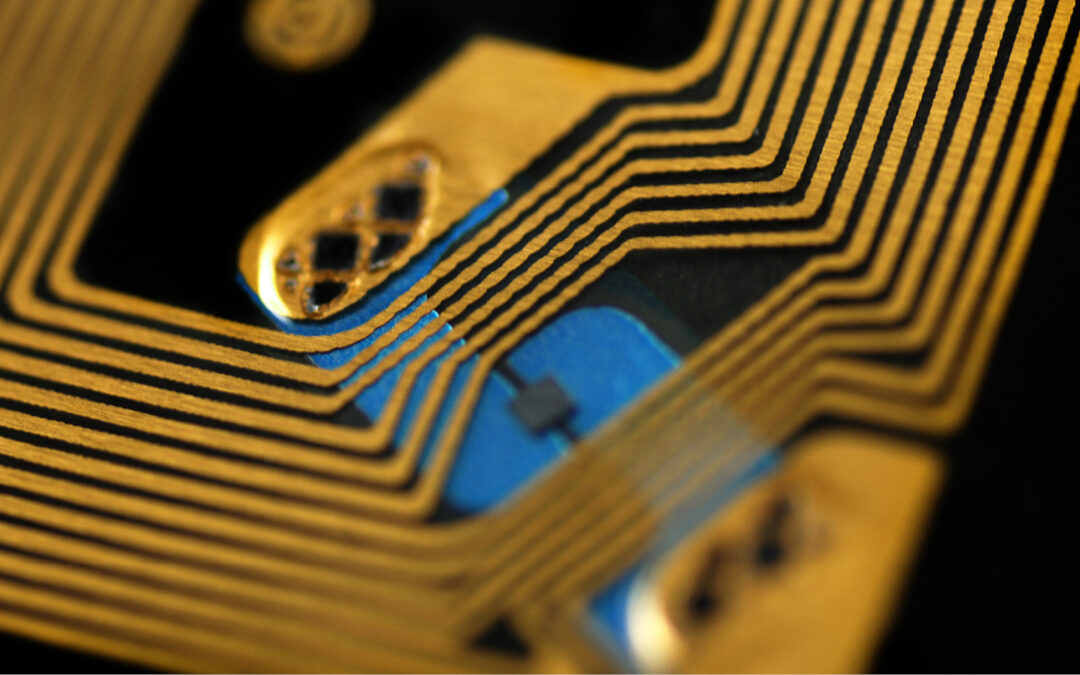
RFID and NFC: a quick distinction
RFID and NFC are closely related technologies. NFC is essentially a subset of RFID, operating at 13.56MHz and designed specifically for short-range communication between devices. What makes NFC particularly relevant today is that it is built into virtually every modern smartphone, meaning the reader is already in the pocket of anyone who needs to interact with a tag.
That changes the economics and practicality of asset tracking significantly. No dedicated scanning hardware, no specialist equipment, no training required. A member of staff taps their phone against a tag and the relevant data is instantly accessible.
Why RFID is experiencing a resurgence
Interest in RFID technology has fluctuated over the years, but it is currently experiencing a significant resurgence. Rising labour costs are a major factor, as is the increasingly favourable pricing of RFID technology itself. When the cost of automating a process falls and the cost of doing it manually rises, the business case becomes straightforward.
The advantages from an inventory management perspective are well documented. In one case study, customers reduced their annual inventory variance from £170,000 to just £5,000 within a year, representing a 300% improvement in accuracy. RFID systems integrate with warehouse management systems and ERP platforms, providing a solid foundation for ongoing optimisation.
Beyond inventory, RFID and NFC support product authenticity verification, end-to-end traceability for food and pharmaceuticals, and security applications for high-value assets. The ability to read multiple tags simultaneously without line of sight gives it a clear practical advantage over traditional barcode scanning in many environments.
NFC is about to get significantly more capable
Here is where things get interesting. The NFC Forum, whose members include Apple, Google, Samsung, and Qualcomm, has published a roadmap for NFC development through the rest of 2026 and beyond that signals some of the most significant upgrades the technology has seen.
Transfer speeds are set to increase by up to eight times, making NFC a viable option for moving larger volumes of data between devices. The technology is also being developed to support a broader range of uses, including multiple functions from a single tap. The same ease of use that makes contactless payment feel effortless is set to extend into a much wider range of applications, including digital key experiences for unlocking and verification tasks.
With roadmap proposals typically appearing on devices within one to two years, and with the major platform and chip manufacturers all invested in the Forum, these upgrades are not distant speculation. They are coming.
What we are working on at Custom Labels Ltd
We have been watching these developments closely, and our R&D team is currently developing an ultra durable NFC asset tag designed for businesses that need reliable, readable asset identification in demanding real world environments.
The thinking behind it is straightforward. NFC is already in every modern smartphone. The technology is becoming faster, more versatile, and more widely supported. And the demand for smarter, more resilient asset tracking is only growing. A tag that combines that connectivity with the materials expertise and print quality Custom Labels Ltd has developed over the years feels like a natural and timely step for us.
We are not ready to share full details just yet, but development is progressing well. If you would like to be among the first to hear more when we are ready, drop us a message or follow our blogs for updates.
Recent Comments